Made for precise cutting: professional tools for metal, sheet metal and more
Sharp. Robust. Developed for professionals who work with precision every day.
Whether sheet metal, aluminium or fine materials – every cut counts in cutting technology. BESSEY offers you clever solutions for this: from robust sheet metal shears and versatile combination shears to lever-assisted models for maximum force, to precise cutter knives and handy multi-tools. Our tools are designed for tough everyday use in workshops and on construction sites – and make your work easier, faster and more accurate.
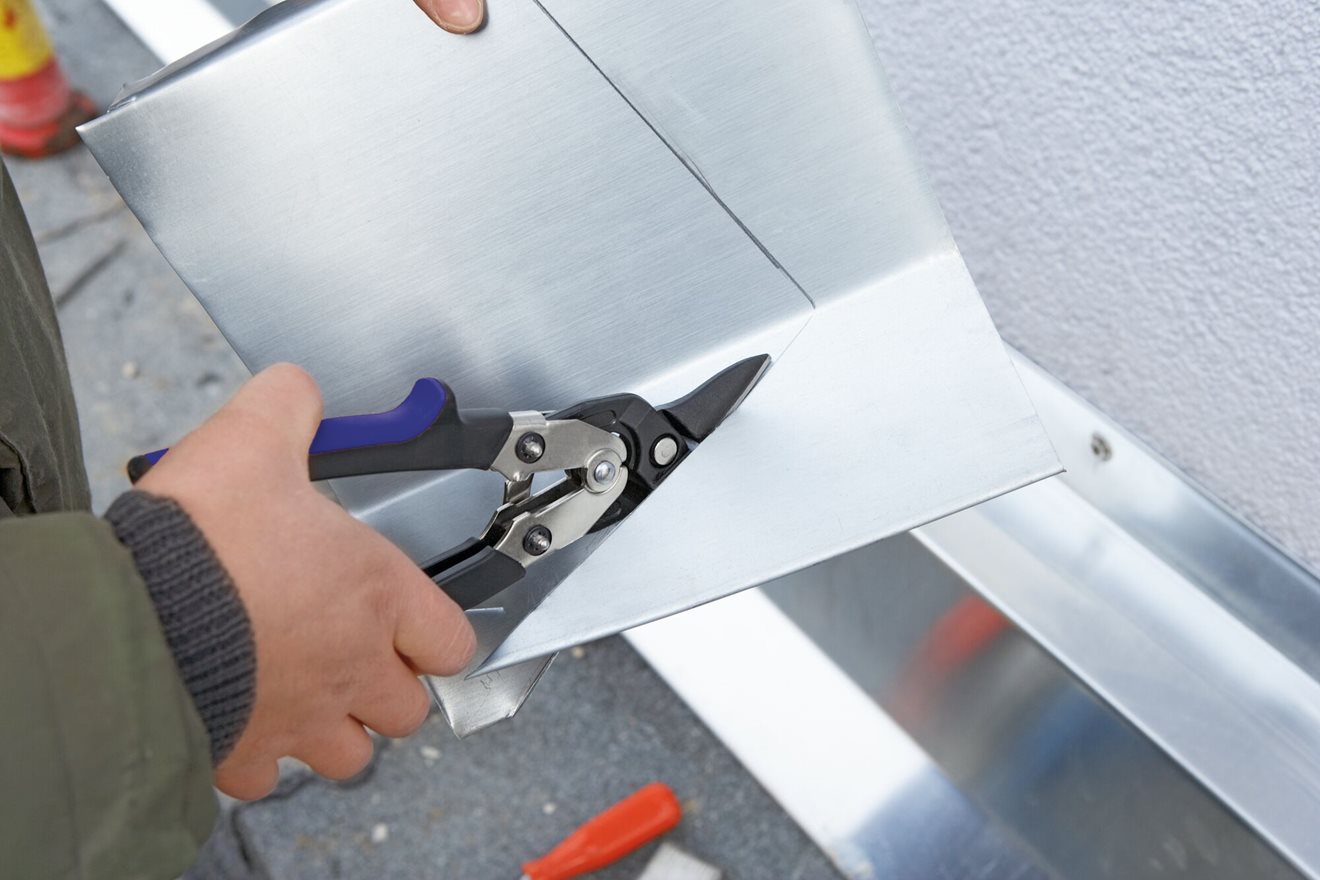
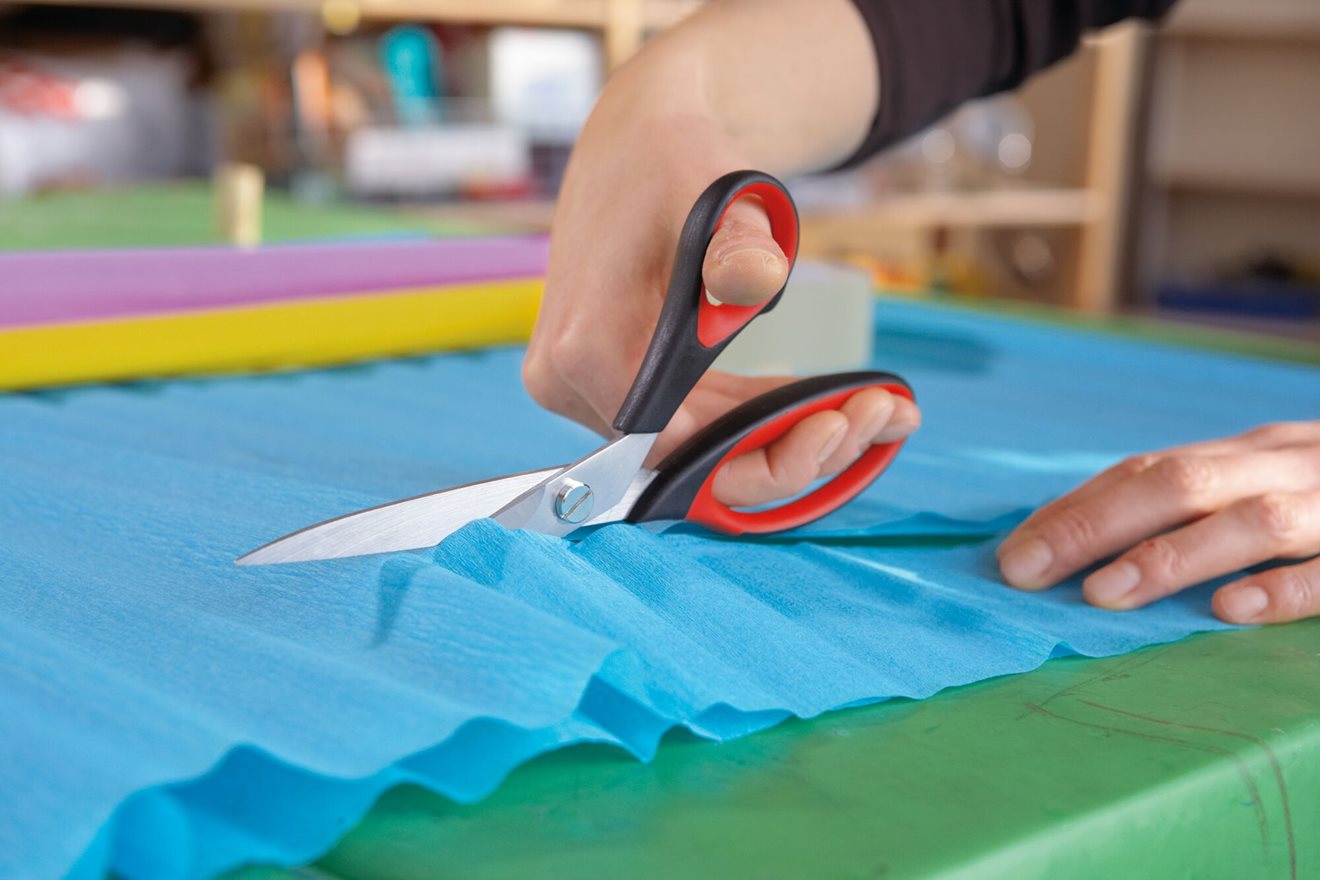
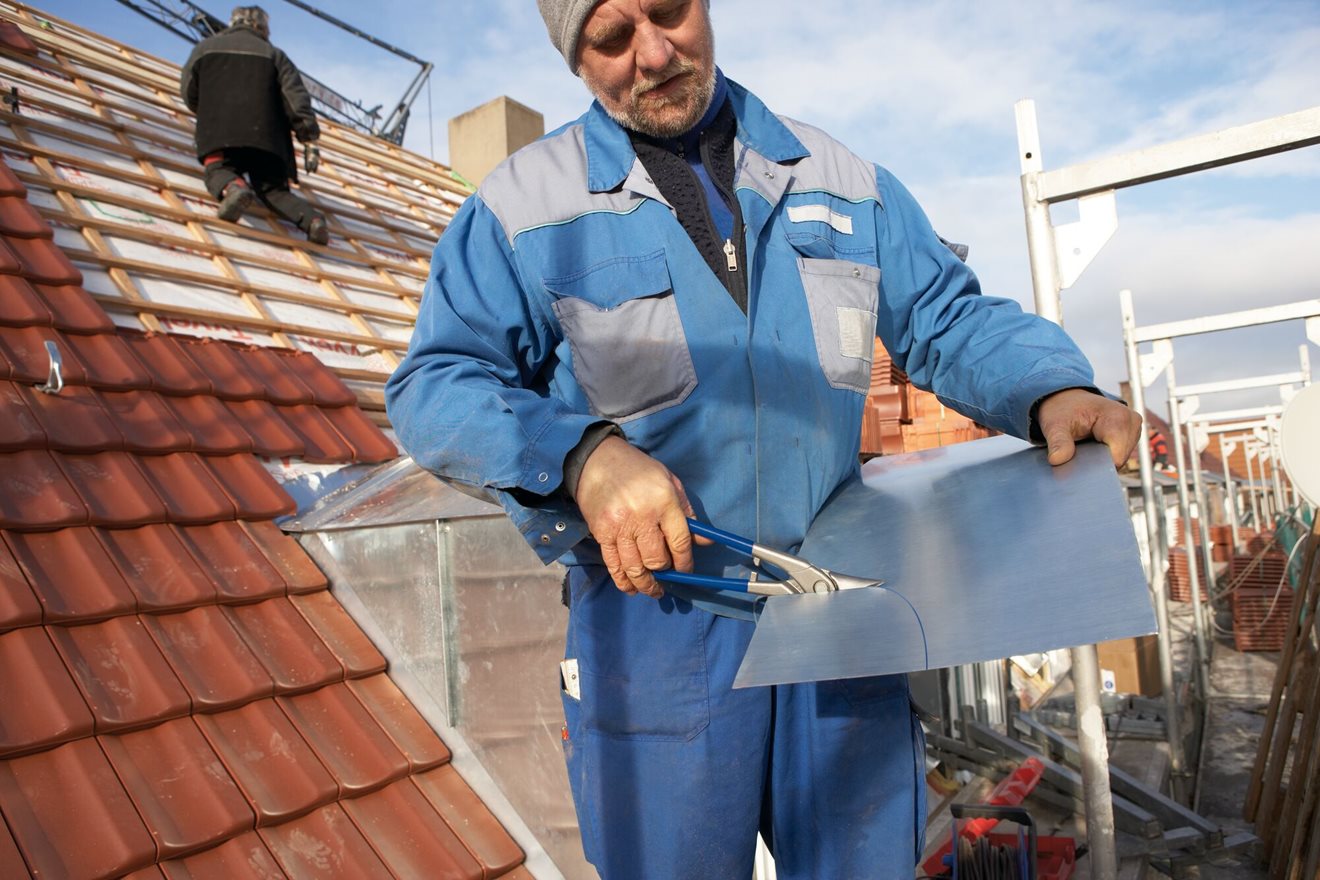
When it comes to cutting with millimetre precision and clean cut edges, you can rely on BESSEY. Our cutting tools offer powerful performance with minimal effort – ideal for professionals in metal construction, plumbing or for precise work around the home. They are well thought-out down to the last detail, built to last and perfectly tailored to your requirements. This allows you to work more efficiently, more safely and with genuine professional tools that deliver what they promise.
Further ranges of cutting technology
What users say about our products

"I love BESSEY hand-operated tin snips! Since completing my training, I wouldn't want to cut anything with anything else. They're precise and, above all, comfortable to hold."
Mitsch
Plumber

Useful cutting technology tool
Frequently asked questions about cutting technology
In standard sheet metal shears , the blade and handle are traditionally forged as a single piece. The cutting force is determined by the ratio of the blade length to the handle length.
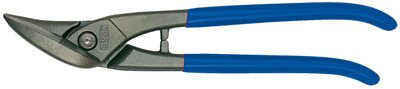
Hand-operated sheet metal shears with a lever ratio consist of a shear head and a handle. Both parts are mounted on hinges, resulting in an additional lever ratio.
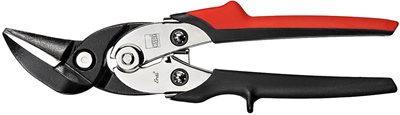
Ideal Shears
These shears truly live up to their name. Ideal shears are genuine ‘all-rounders’. You can use them to cut straight through sheet metal (through-cut) as well as to cut large and small contours or radii (shaped cut). It makes no difference whether you are cutting at the edge of the sheet (trimming cut) or in the middle of the panel. Of course, you can also use Ideal shears for simple notching work.
Shaped shears
Figurative shears are best suited if you wish to make fine, tight radius cuts at the edge of the sheet metal panel. Thanks to the delicate blade shape of these shears, you can effortlessly cut extremely tight shapes or curves.
Through-cut shears
Do you want to cut a sheet in the middle and/or at the edges? Then straight-cut shears are the right tool for you. With the long blades of these tools, you can quickly, with little effort and yet precisely cut to length and notch even large-format sheets.

With the acquisition of the long-established Diener Werkzeugfabrik GmbH in 1979, BESSEY specifically expanded its product portfolio to include cutting technology. The Erdi brand, which was already renowned at the time for its high-quality sheet metal shears, was integrated into the company and continued as an independent product brand under the BESSEY umbrella. Today, the name BESSEY Erdi stands for a wide range of cutting tools that combine BESSEY’s innovative strength and quality standards with the long-standing expertise and tradition of Erdi shears. Users thus benefit from a clear quality promise and a consistent brand identity within the BESSEY range.
Right-handed scissors are ground and designed in such a way that you can easily cut right-hand curves (i.e. a curve from left to right) with them. Curves from right to left are best cut with left-handed scissors.
It is often believed that right-handed scissors are for right-handers and left-handed scissors for left-handers. This is not true. On the contrary. When you, as a right-hander, cut a curve with right-handed scissors (see below, from left to right), you cut away from your wrist. With left-handed scissors (curve then from right to left), you cut towards your wrist. Which is significantly more ergonomic.
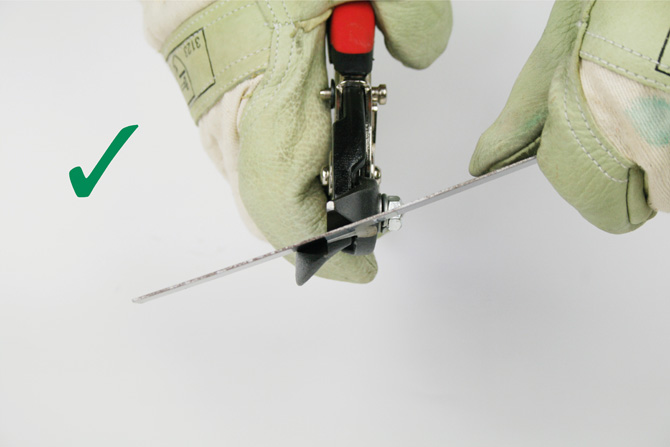
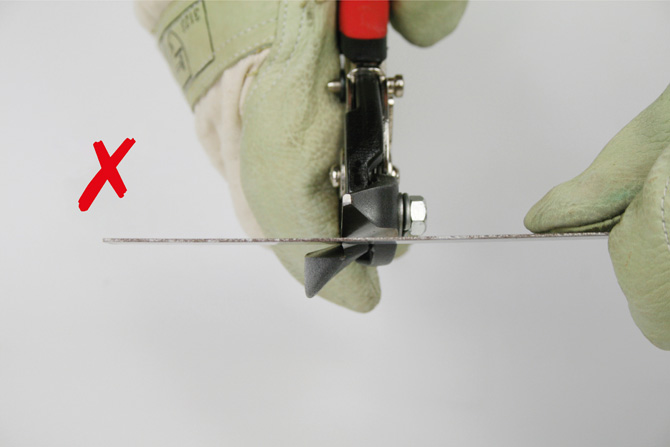
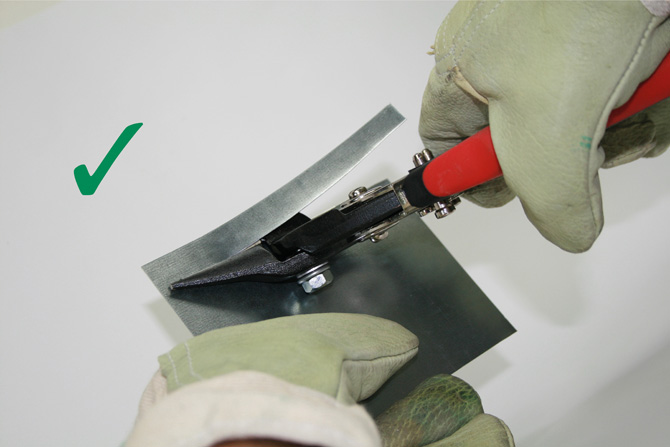
It is not just the quality of the scissors that affects the result. It also depends on using the tool correctly:
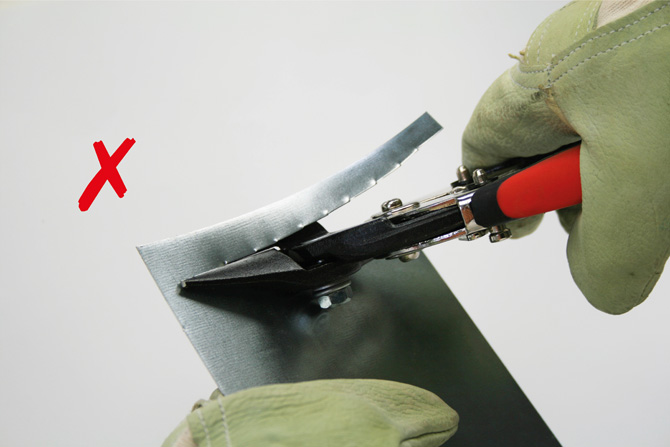
The sheet metal must be placed on the cutting jaw. Only then can an optimal cut be achieved due to the cutting radii. If it is not placed on the cutting jaw, it will warp. This results in increased effort and a shorter service life.
To cut, open the shears wide and push the sheet metal as far as possible into the jaws of the shears. The shears should not be closed completely whilst cutting: open the shears after about three-quarters of the cutting length and close them again. This is the only way to achieve a burr-free cut. If the shears are closed completely, small transverse cracks will form at the end of each cut.
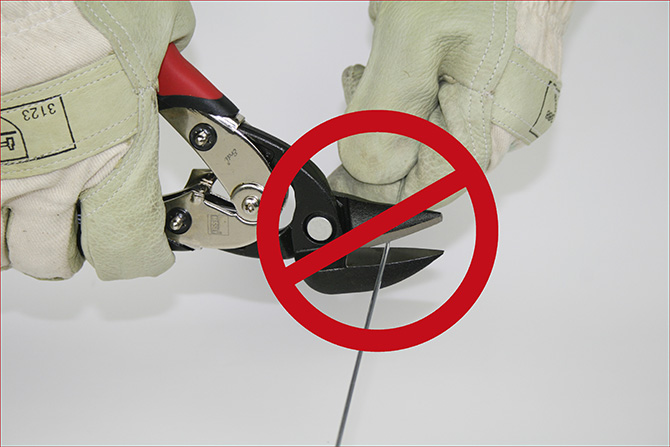
It is also important to note that hand-operated sheet metal shears should only be used for cutting thin sheets of soft metals and steel . They are not suitable for cutting through round or square metal shapes, such as wire, as this would cause the blades to break.
|
|
|
|
|
|
|
|
If you do not have enough strength to cut the sheet metal by hand, there could be two reasons for this: either the blades are simply blunt, or the sheet metal may be too thick. When using hand-operated sheet metal shears , it is important to ensure that you only cut sheets with a thickness of between 1.2 and 1.9 mm. However, this always depends on the type of sheet metal as well as the quality of the blades.